MCT oil: forms and which to choose

On the shelves of sports nutrition stores, MCT comes in several formats: from clear liquid oil to powders for coffee and capsules. They differ in composition, tolerance, and price per gram. Our editorial team explains what lies behind each form and how to choose the option best suited to your goal.
What exactly we buy under the name “MCT”
The term MCT (medium-chain triglycerides) covers triglycerides that contain fatty acids with a chain length of 6 to 12 carbon atoms. In practice, commercial products almost always consist of caprylic (C8) and capric (C10) acids, while caproic acid (C6) is removed because of its unpleasant taste and smell.
There is no consensus among experts regarding lauric acid (C12). Formally it is classified as medium-chain, but in the body it largely behaves like a long-chain acid: it is partly absorbed via the lymph and is less ketogenic. That is why coconut oil, in which lauric acid predominates, is incorrectly considered a “natural MCT oil.”
The raw material for MCT is usually coconut or palm kernel oil. The needed fatty acids are separated from them by fractionation and then esterified with glycerol. The origin of the raw material matters from the standpoint of environmental standards, but it has minimal effect on the composition of the finished product.
So when choosing a product, look first at the ratio of C8 to C10, the form, and the additional components, rather than at the marketing labels on the package.
Main forms available
Several forms of MCT are available on the market, each with its own strengths and weaknesses. Our editorial team has summarized them in a table.
| Form | Advantages | Disadvantages | Who it suits |
|---|---|---|---|
| Liquid C8/C10 oil | Highest concentration, low price per gram, no additives | More often causes gastric discomfort, inconvenient on the go | Experienced users, for dressings and smoothies |
| Liquid C8 oil (pure tricaprylin) | Strongest ketogenic effect | More expensive, just as demanding on dose | For ketogenic nutrition |
| MCT powder | Better tolerance, easily mixes with coffee | Contains carriers, less MCT per serving | Beginners, for drinks |
| Capsules | Convenience, precise dosing | Small amount per capsule, many capsules needed | For small doses while traveling |
| Ready-made creamers and drinks with MCT | Taste, convenience | Sugar, sweeteners, little MCT | For occasional use |
Liquid oil is the classic and most economical option. It has no taste or smell and is easily added to dishes, but it is tolerated worst on a completely empty stomach.
The powdered form is obtained by spray-drying an emulsion of MCT with a carrier — for example, gum arabic, maltodextrin, or sodium caseinate. The carrier “dilutes” the fat and slows its arrival in the intestine, so the powder causes nausea and diarrhea much less often.
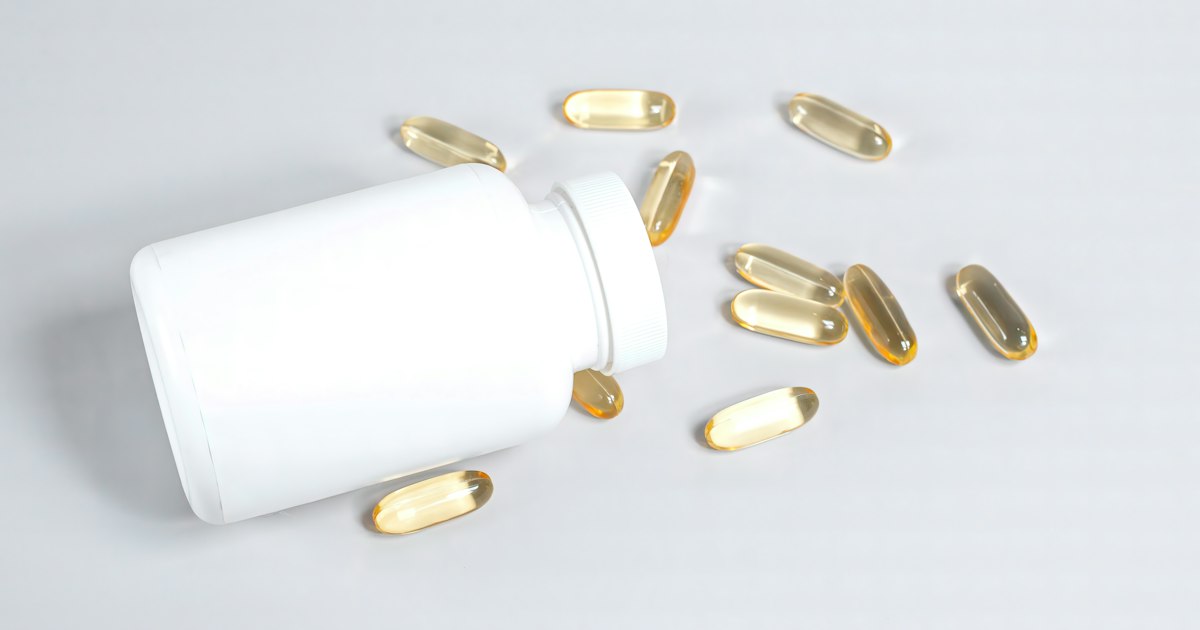
Capsules are convenient but usually contain only about 1 g of oil. To get even 10 g, you would have to swallow a dozen capsules, which makes this form more of a “travel” option than a main one.

Fatty acid composition: C8, C10, or a blend
The ratio of fatty acids determines how actively the product raises ketone levels. In a crossover study by Vandenberghe and colleagues (2017), it was pure tricaprylin (C8) that gave the highest ketogenic response, noticeably exceeding coconut oil and C8/C10 blends.
The most common blend on the market is approximately 60% C8 and 40% C10. It is cheaper than pure C8 and provides a moderate rise in ketones. For most people who use MCT for satiety or energy, this blend is quite sufficient.
Pure C8 makes sense for those who specifically aim for deeper ketosis, for example on a therapeutic ketogenic diet under a doctor's supervision. Capric acid (C10) gives a smaller ketogenic effect, so blends with a high proportion of C10 are less suitable for this purpose, although they are quite acceptable for general use.
If the manufacturer does not specify the C8-to-C10 ratio on the label or in the certificate of analysis, that is a reason to be wary. Reliable companies state the fatty acid composition directly.
How to assess product quality
In addition to the form and the fatty acid ratio, when choosing MCT it is important to pay attention to signs of quality. Here is what our editorial team advises looking at:
- Full fatty acid compositionon the label or in the certificate of analysis (CoA).
- Absence of C12 in large amounts, if your goal is ketones.
- Composition of carriers in the powder:caseinate is not suitable for milk-protein intolerance, maltodextrin adds carbohydrates.
- Packaging:dark glass or dense plastic that protects from light.
- Extraneous additives:sugar, flavorings, sweeteners.
- Certification of the raw material(for example, RSPO for palm kernel oil), if ethical aspects matter to you.
It is useful to compare not the price per package but the price per gram of MCT. A powder containing 50–70% MCT may seem cheap, but in practice it turns out to be more expensive than liquid oil.
The shelf life of MCT oil is quite long, because saturated fats are resistant to oxidation. However, if the product develops a sharp smell or a bitter taste, it is better not to consume it.
For powder, moisture resistance is important: if it clumps into lumps, the package was stored incorrectly and the quality may have deteriorated.
Which form to choose: a practical algorithm
If you are only getting acquainted with MCT, our editorial team advises starting with the powdered form or with small doses of a liquid C8/C10 blend added to food. This minimizes the risk of gastric discomfort.
For those who already know their tolerance and take MCT regularly, liquid oil will be the most advantageous. It allows precise dosing of the product and contains no unnecessary ingredients.
For supporters of ketogenic nutrition who value the maximum ketogenic effect, it makes sense to consider pure C8. However, it is worth remembering that a higher ketogenic effect does not mean a better effect on athletic performance.
Capsules and ready-made MCT drinks are suitable as a supplement for trips or occasional use, but not as a main source.
Editorial conclusions
The form of MCT determines not only convenience but also tolerance and ketogenic effect. Liquid oil is the most economical, powder is the gentlest on the stomach, and capsules are the most convenient on the go.
Fatty acid composition is more important than marketing: pure C8 is the most ketogenic, the C8/C10 blend is universal, and coconut oil is not a full substitute for MCT.
Choose products with a transparent composition and a certificate of analysis, and compare the price per gram of actual MCT.
To round out the picture, read our articles “How to take MCT oil,” “Side effects of MCT oil,” and “Myths about MCT oil.”
References
- Vandenberghe C, St-Pierre V, Pierotti T, Fortier M, Castellano CA, Cunnane SC. Tricaprylin alone increases plasma ketone response more than coconut oil or other medium-chain triglycerides: an acute crossover study in healthy adults. Curr Dev Nutr. 2017;1(4):e000257.
- Bach AC, Babayan VK. Medium-chain triglycerides: an update. Am J Clin Nutr. 1982;36(5):950–962.
- St-Onge MP, Jones PJH. Physiological effects of medium-chain triglycerides: potential agents in the prevention of obesity. J Nutr. 2002;132(3):329–332.
- Traul KA, Driedger A, Ingle DL, Nakhasi D. Review of the toxicologic properties of medium-chain triglycerides. Food Chem Toxicol. 2000;38(1):79–98.
- Eyres L, Eyres MF, Chisholm A, Brown RC. Coconut oil consumption and cardiovascular risk factors in humans. Nutr Rev. 2016;74(4):267–280.
- Clegg ME. Medium-chain triglycerides are advantageous in promoting weight loss although not beneficial to exercise performance. Int J Food Sci Nutr. 2010;61(7):653–679.
Andriy Melnyk
A strength-sports coach and author of programs for beginner and intermediate levels. Writes about training planning.