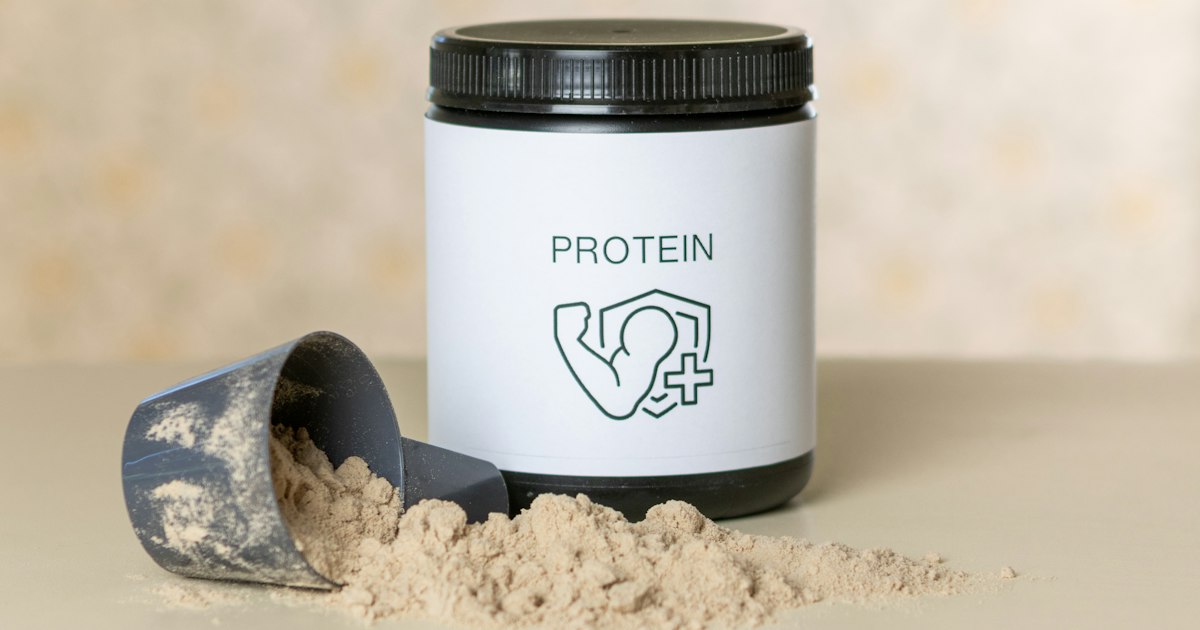
Egg protein: what it is and how it works
Egg white has been the benchmark of protein quality in food science for decades. In sports nutrition, its powdered form has become an alternative to dairy proteins. Our editorial team explains what egg protein is, what it consists of, how it is absorbed, and how it affects the muscles.
What egg protein is
Egg protein is a concentrated protein obtained from chicken eggs. In sports nutrition, this name most often refers to dried egg white (albumin): the liquid white is separated from the yolk, pasteurized, and spray-dried into a powder. Such a product contains approximately 75–85% protein depending on the technology and additives.
Less common are whole-egg products, which retain the yolk with its fats, cholesterol, fat-soluble vitamins, and phospholipids. They are higher in calories and have a different taste, but are closer in composition to ordinary food.
Egg white was long considered the “benchmark” in food science: the quality of other proteins was compared with it. It contains all the essential amino acids in balanced proportions, and on the PDCAAS scale described by Schaafsma (2000) it receives the maximum score of 1.0 — the same as whey and casein.
In the sports nutrition niche, egg protein occupies a place between “fast” whey and “slow” casein. It is chosen by people who do not consume dairy products, are lactose intolerant, or simply prefer alternative protein sources.
Composition and amino acid profile
The protein fraction of egg white is heterogeneous: it consists of several dozen proteins, of which a few main ones predominate.
Ovalbumin is the main protein of egg white, the source of most of the amino acids. Ovotransferrin binds iron, lysozyme has an antibacterial effect, and ovomucoid is a trypsin inhibitor and at the same time one of the main egg allergens. Avidin in a raw egg binds biotin, but with heating and pasteurization it is largely inactivated.
In terms of amino acid composition, egg white is rich in leucine, valine, and the sulfur-containing amino acids methionine and cysteine. Its leucine content is somewhat lower than in whey protein, but higher than in most plant proteins.
| Indicator | Egg protein | Whey protein | Casein |
|---|---|---|---|
| Source | Egg white | Milk whey | Milk |
| PDCAAS | 1.0 | 1.0 | 1.0 |
| Absorption rate | Medium | High | Slow |
| Lactose | None | Present (less in isolate) | Present |
| Main allergen | Ovomucoid, ovalbumin | Beta-lactoglobulin | Caseins |
Dried egg white contains almost no fat or carbohydrates, so its calorie content is determined practically entirely by protein. On the other hand, it contains a noticeable amount of sodium, which people on a salt-free diet should take into account.

How egg protein is absorbed
The absorption of egg white depends greatly on heat treatment. The classic study by Evenepoel and colleagues (1998) using stable isotopes showed that the digestibility of cooked egg white was about 90%, whereas that of raw egg white was only about 50%. The reason is that heating denatures the proteins and makes them more accessible to digestive enzymes, and also inactivates protease inhibitors.
Egg white powder undergoes pasteurization, so in terms of digestibility it approaches a heat-treated product. This is one of the advantages of the supplement compared with the habit of drinking raw eggs.
After digestion, the amino acids enter the blood, raising their concentration over several hours. The kinetics of egg white are slower than those of whey, but faster than those of micellar casein, so it is often called a protein of “medium speed.”
For muscle protein synthesis, leucine plays a key role: it activates the mTORC1 signaling pathway. A serving of egg protein providing 20–25 g of protein contains an amount of leucine sufficient for noticeable stimulation of synthesis.
Mechanism of action on the muscles
Like any complete protein, egg protein acts through two mechanisms: it supplies the “building blocks” — amino acids — for the synthesis of new proteins and at the same time triggers the signals that activate this synthesis.
One of the best-known “dose-response” studies — the work of Moore and colleagues (2009) — was carried out precisely with egg white. Young men received from 0 to 40 g of egg protein after resistance training. Muscle protein synthesis increased with the dose and reached a plateau at about 20 g, whereas 40 g mainly increased the oxidation of amino acids.
The study by van Vliet and colleagues (2017) showed that whole eggs stimulated muscle protein synthesis after training more strongly than a protein-equivalent amount of egg whites. The authors suggest that other components of the yolk play an important role. This is an interesting argument in favor of whole eggs in the diet, although it does not translate directly to long-term results.
For gaining muscle mass, the total daily amount of protein and regular resistance training are decisive. The meta-analysis by Morton and colleagues (2018) showed that protein supplements enhance gains in mass and strength, and the benefit decreases after about 1.6 g of protein per kilogram of body weight per day.
- Delivery of all the essential amino acids.
- Activation of mTORC1 via leucine.
- Maintaining a positive nitrogen balance with adequate energy intake.
Who egg protein suits
Egg protein is a good option for people with lactose intolerance or an allergy to cow's milk proteins, if they have no egg allergy. It is also suitable for vegetarians who eat eggs (ovo-vegetarians).
The product has a neutral nutritional value and contains virtually no fat, so it is used during periods of weight loss, when it is important to get the maximum protein with the minimum calories.
At the same time, egg protein has features of taste and texture: it is less “creamy” than whey, can foam, and has a characteristic aftertaste. The price per gram of protein is usually higher than that of whey concentrate.
For people with an egg allergy, especially those with reactions to ovomucoid, egg protein is contraindicated. We cover the side effects in more detail in a separate article.
Editorial conclusions
Egg protein is a high-quality complete protein with the maximum PDCAAS score, a medium absorption rate, and a good leucine content.
Heat treatment and pasteurization are critically important for its digestibility, so the powder has an advantage over raw eggs.
It is a sensible alternative to dairy proteins for people with lactose intolerance or a milk allergy, provided there is no egg allergy.
Our articles “The benefits of egg protein for athletes: the evidence base,” “How to take egg protein,” and “Side effects of egg protein” will help you continue the topic.
References
- Schaafsma G. The protein digestibility-corrected amino acid score. J Nutr. 2000;130(7):1865S–1867S.
- FAO. Dietary protein quality evaluation in human nutrition: report of an FAO Expert Consultation. FAO Food and Nutrition Paper 92. Rome: FAO; 2013.
- Evenepoel P, Geypens B, Luypaerts A, Hiele M, Ghoos Y, Rutgeerts P. Digestibility of cooked and raw egg protein in humans as assessed by stable isotope techniques. J Nutr. 1998;128(10):1716–1722.
- Moore DR, Robinson MJ, Fry JL, et al. Ingested protein dose response of muscle and albumin protein synthesis after resistance exercise in young men. Am J Clin Nutr. 2009;89(1):161–168.
- van Vliet S, Shy EL, Abou Sawan S, et al. Consumption of whole eggs promotes greater stimulation of postexercise muscle protein synthesis than consumption of isonitrogenous amounts of egg whites in young men. Am J Clin Nutr. 2017;106(6):1401–1412.
- Morton RW, Murphy KT, McKellar SR, et al. A systematic review, meta-analysis and meta-regression of the effect of protein supplementation on resistance training-induced gains in muscle mass and strength in healthy adults. Br J Sports Med. 2018;52(6):376–384.
- Jäger R, Kerksick CM, Campbell BI, et al. International Society of Sports Nutrition position stand: protein and exercise. J Int Soc Sports Nutr. 2017;14:20.
Andriy Melnyk
A strength-sports coach and author of programs for beginner and intermediate levels. Writes about training planning.